20.2K
Downloads
137
Episodes
Dive deep into the world of science and engineering with engaging discussions and thought provoking debates. The team share insights from careers in science and engineering, combining expert knowledge and scientific thinking with a touch of humour to make even the most complex topics accessible and entertaining for both enthusiasts and casual listeners. Sometimes we’re funny, often we’re opinionated, always we’re entertaining. Support us: https://ko-fi.com/techspeak_podcast X/Twitter: @TechnicallySp11 Instagram: technicallyspeaking.podcast Reddit: techspeak_podcast Email: techspeak.podcast@gmail.com
Episodes
Apr 6, 2023
Apr 6, 2023
34 min
Recent news has reported that the sale of collagen supplements is making a huge contribution to deforestation. Antonia, Ellie and Laura talk about what collagen is, why we need it, how our bodies make it and whether supplements can help. They also dive into the news articles that link this beauty product to deforestation and question just how big the link is.
Mar 23, 2023
Mar 23, 2023
27 min
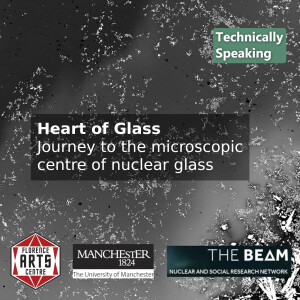
Nuclear waste is hugely important for society; the UK has used nuclear power for decades and now we need to safely and responsibly dispose of the waste. Laura talks to Penny Harvey and Petra Tjitske Kalshoven, two anthropologists at the University of Manchester and part of The BEAM research network. They discuss how nuclear waste can be locked away deep underground in a specially engineered facility, the process to find a site for the facility, and how communities can learn more about this process. They also talk about glass as art and its use in other practical applications, and our relationship with this material.
Heart of Glass is an exhibition at Florence Arts Centre in Egremont, West Cumbria, UK. The exhibition is on 24th March to 30th June and features images taken at a microscopic scale of nuclear waste glass.
The exhibition is supported by The University of Manchester and involves The BEAM nuclear and social research network.
Mar 16, 2023
Mar 16, 2023
22 min
You may not realise it but scientists are just as creative as artists. Laura is joined by Tamas Zagyva, a research associate at Imperial College London, and Bridget Kennedy, an artist and lecturer in fine art at Newcastle University, to talk about how they find inspiration, what sort of emotions their work evokes, and what sort of skills are required in their respective disciplines.
Heart of Glass is an exhibition at Florence Arts Centre in Egremont, West Cumbria, UK. The exhibition is on 24th March to 30th June and features images taken at a microscopic scale of nuclear waste glass.
The exhibition is supported by The University of Manchester and involves The BEAM nuclear and social research network.
Mar 9, 2023
Mar 9, 2023
22 min
Vitrification – the process of making glass – is used to immobilise nuclear waste and also happens naturally in the earth. Laura talks to Tracey Taylor from the UK’s National Nuclear Laboratory about the glass making process and to Brian O’Driscoll, a geologist from the University of Ottawa in Canada, about natural glass and why researching this material is so important.
Heart of Glass is an exhibition at Florence Arts Centre in Egremont, West Cumbria, UK. The exhibition is on 24th March to 30th June and features images taken at a microscopic scale of nuclear waste glass.
The exhibition is supported by The University of Manchester and involves The BEAM nuclear and social research network.
Mar 2, 2023
Mar 2, 2023
1 min
We're part of an exhibition where science becomes art!
Heart of Glass is an exhibition at Florence Arts Centre in Egremont, West Cumbria, UK. The exhibition is on 24th March to 30th June and features images taken at a microscopic scale of nuclear waste glass.
The exhibition is supported by The University of Manchester and involves The BEAM nuclear and social research network.
Feb 23, 2023
Feb 23, 2023
26 min
It may not be a very well-known discipline but materials science is really important. Laura, Jasmin and Emma discuss how graphene is made, what makes it a wonder material, what it can be used for and how it can contribute to making environmentally friendly products. They also talk about a much more mature material which influenced the second industrial revolution: steel. This alloy might be old technology but it’s vital for modern life.
This episode was recorded with an audience from the Engineering Development Trust's Routes to STEM course.
Feb 9, 2023
Feb 9, 2023
36 min
There’s a technology boom (!) and loads of buzzwords surround it including I4.0, big data, and digital twin. Laura and Antonia are joined by special guest Matt, from the Nuclear Institute, to talk about what these things really mean and to try and define them. They also talk about how the nuclear industry is starting to embrace these new technologies, ushering a renaissance of nuclear power that builds on the vast expertise gained since the original reactors were built in 1950s and combines it with cutting edge technology.
Jan 26, 2023
Jan 26, 2023
32 min
To mark our 50th episode we're revisiting the topic of our first ever episode with a fresh perspective. Laura, Antonia, Rwayda and Jasmin talk about how much the climate will change, how we can have confidence in the climate models, and what civil engineers must do to adapt infrastrucutre like roads and buildings to minimise future risks from the changed climate. They also discuss the perception of risk and how this can influence the decisions that are made.
Jan 12, 2023
Jan 12, 2023
33 min
Loads of alternatives to meat are appearing but what's in them and how are they made? Laura, Ellie and Jasmin discuss their preferences, look at how minced beef is made, compare nutritional factors and speculate on what the future might hold. They also ask existential questions like what is meat anyway and when is a sausage not a sausage?
Laura did way more research than the team could include in this episode. Read it here.
Dec 15, 2022
Dec 15, 2022
37 min
Ever wondered what it’s like to work on a documentary? Antonia asks Ellie and Laura about their experiences of working on TV or as a consultant science communicator. They talk about how they got into science communication, what their role was on the various shows they’ve worked on, and how you tell a compelling story.